Want to join the Club?

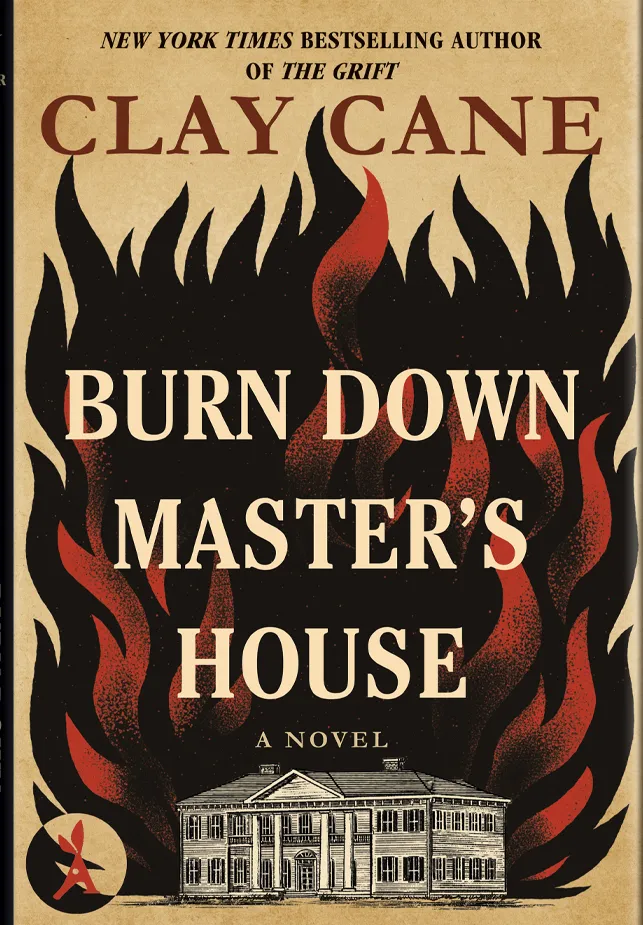
Burn Down Master’s House

Clay Cane

Debut Novel
Historical

At a glance

🗣
Polyvocal narrative
📜
Inspired by real history
🦶
Includes footnotes
Under 300 pages

Inspired by true, long-buried stories of enslaved people who dared to fight back, a searing portrayal of resistance for readers of Colson Whitehead, Jesmyn Ward, and Percival Everett, from Clay Cane, award-winning journalist and New York Times bestselling author of The Grift.

As turmoil simmers within a divided nation, smoke from another blaze begins to rise. Sparked by individual acts of resistance among those enslaved across the American South, their seemingly disparate rebellions fuel a singular inferno of justice, connecting them in ways quiet at times, explosive at others. As these flames rise, so will they.

Luke, quick-witted and literate, and Henri, a man with a strong and defiant spirit, forge an unbreakable bond at a Virginia plantation called Magnolia Row. Both seek escape from unimaginable cruelty. And sure as the fires of hell, Luke and Henri will leave their mark, sparking resistance among the lives they touch…

One is Josephine, a young, sharp, and observant girl who wields silence as her greatest weapon. A witness to Luke and Henri’s resilience, she listens, watches, waits for the moment to make her move.

Then there is Charity Butler, her husband a formerly enslaved man who proved his ferocity as a young boy standing alongside Josephine. At his encouragement, Charity fights for her freedom in court and wins – only to battle a deeply unjust system designed to destroy the life they’ve built.

And finally, there is Nathaniel, who ruthlessly exploits other Black people and mirrors the cruelty of the white men who, like him, are enslavers. A perversion of the system of slavery, his fragile and contradictory rule will become a catalyst of its own.

Inspired by the true stories of the profoundly courageous men and women who dared to fight back, Burn Down Master’s House is a singular tour de force of a novel—breathtaking in scope, compassion, and a timeliness that speaks powerfully to our present era.

Don’t just take
our word for it

"With shades of Kindred, James, and The Prophets, this story belongs to a long tradition of resistance that traces back to 1526, when enslaved Africans burned down their captors’ settlement in what is now South Carolina. Cane — a naturally gifted storyteller — weaves a brutal, bold narrative."

- Keith Boykin, New York Times bestselling author of Why Does Everything Have to Be About Race?

"To refill my well of radical hope, I read resistance stories. Whether from history or from historical imagination. Burn Down Master’s House is a resistance story for the ages. Clay Cane’s gripping novel is based on real stories of enslaved women and men, of their audacious struggle against slavery."

- Ibram X. Kendi, National Book Award-winning author of Stamped from the Beginning

"A bold and unflinching novel, Burn Down Master’s House reclaims the lost voices of American slavery and fearlessly confronts myths that whitewash history. A powerful fiction debut that demands to be read."

- Angie Thomas, #1 New York Times bestselling author of The Hate U Give
Get a taste

The cabin was beaten down by humiliation and despair, infesting every corner of the caged space. The filth was stitched into the walls, into the hay-strewn dirt floor, into the rusted hinges of the door that never closed all the way. The cramped room was a sweatbox and a stage all at once. “Please, Henri, just do it,” Suzie begged. She sat hunched on the floor, clutching the remains of a blanket to her bare chest. Her eyes pleading with him more than her words ever could.

Henri’s body betrayed him, as it always had in moments like this. He hated himself for the way he went limp, the way the thought of touching Suzie—of giving the master what he wanted—felt like a death he couldn’t bear.

Suzie sighed with unsympathetic frustration. “Why can’t you just give me some babies, like Master said? You know what’ll happen if you don’t.”

Henri stared at her. Suzie was the oldest girl on the plantation who hadn’t birthed any property, and he was the lone man who hadn’t fathered any field hands. They were nothing more: failed machines in an apparatus that demanded they work, produce, and abide. Suzie blamed the “African” in his blood for what she saw as stubbornness. Henri sat back, his hands resting on his knees, his broad shoulders slumping. “Think I don’t know?” he said. “Think I don’t know what happens when they don’t get what they want? But it ain’t just about babies, Suzie. We not making no children here. We making slaves.”

Want to join the Club?

Book notes

  • 🙋‍♀️ Why we chose

    A scorching, searing tale blazing with rage and vengeance, Burn Down Master’s House reads like—well, like a house on fire.

    It’s meticulously researched, excavating and illuminating true but little-known stories of historically enslaved people. The narrative is centred around a place—Magnolia Row, a plantation in Civil War-era Virginia—rather than on a singular POV, yet the characters are fully-formed and complex, with stories that contain deep emotionality. It begins with Luke and Henri’s sweeping (and devastating) romance and continues across generations of enslaved people living on Magnolia Row, following their stories of resistance and rebellion.

    Burn Down Master’s House offers a matter-of-fact, incisive portrayal of enslaved people’s lives, yet it’s far from “trauma porn”—in fact, Clay Cane argues that the act of retelling these stories is itself a gesture of hope, celebrating a future of liberation rather than mourning a history of enslavement. When times feel hopeless, Cane urges us to look back through history for inspiration: “If people are swayed to believe resistance is hopeless, they’ll surrender before the battle even begins,” he writes, “but once they learn of others who have resisted and won, the idea of rebellion transforms from a fantasy into a possibility.”

  • ⚠️ Content warnings

    Slavery, torture, child abuse, sexual abuse, hate speech.