Want to join the Club?

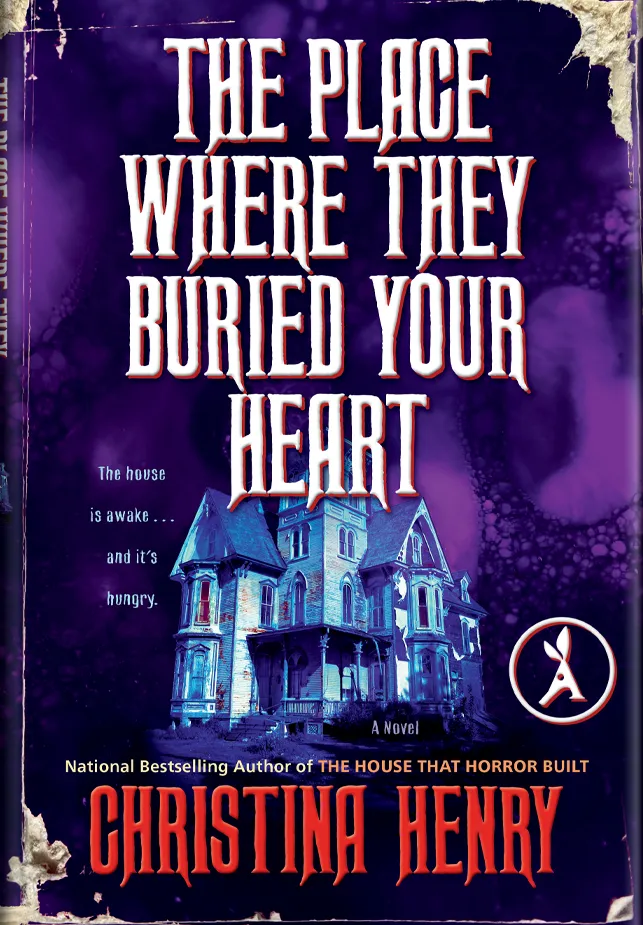
The Place Where They Buried Your Heart

Christina Henry

Horror

At a glance

🏠
Zillow nightmares
🤝
Childhood dares
😱
Nightmare fuel
🗣
Polyvocal narrative

A woman must confront the evil that has been terrorizing her street since she was a child in this gripping haunted house novel from the national bestselling author of The House That Horror Built and Good Girls Don’t Die.

On an otherwise ordinary street in Chicago, there is a house. An abandoned house where, once upon a time, terrible things happened. The children who live on this block are told by their parents to stay away from that house. But of course, children don’t listen. Children think it’s fun to be scared, to dare each other to go inside.

Jessie Campanelli did what many older sisters do and dared her little brother Paul. But unlike all the other kids who went inside that abandoned house, Paul didn’t return. His two friends, Jake and Richie, said that the house ate Paul. Of course adults didn’t believe that. Adults never believe what kids say. They thought someone kidnapped Paul, or otherwise hurt him. They thought Paul had disappeared in a way that was ordinary, explainable.

The disappearance of her little brother broke Jessie’s family apart in ways that would never be repaired. Jessie grew up, had a child of her own, kept living on the same street where the house that ate her brother sat, crouched and waiting. And darkness seemed to spread out from that house, a darkness that was alive—alive and hungry.

Don’t just take
our word for it

"The Place Where They Buried Your Heart is an ode to all facets of a haunted house tale. Henry masterfully layers childhood nostalgia and complex family relationships with genuine chills and eerie thrills. I was equal parts moved and terrified. Read this under the covers with a very strong flashlight!"

- Erin A. Craig, #1 New York Times bestselling author of The Thirteenth Child

"The Place Where They Buried Your Heart is a cosmic blast of haunted house horror in which Christina Henry explores the complex bonds of families—both the ones we lose and the ones we gain—and how those relationships can be found in the most unexpected of places. It’s a story about monsters, and murder, and loss, but it’s also a story about the ferocity of love, and the improbable ways it can capture our hearts."

- Philip Fracassi, author of Boys in the Valley

"An excellent, original haunted house story, but its truly unsettling magic is the way it delves into the ability of the past to haunt an entire neighborhood, across generations."

- Christopher Golden, New York Times bestselling author of The Night Birds and Road of Bones
Get a taste

I was at home, grounded for stealing cigarettes from Johnnie’s corner store, on the day my baby brother, Paul, was eaten by the house at the end of the street. Paul was eight and I was thirteen. I wasn’t there when it happened but it was my fault anyway.

The house, the old McIntyre place, had been abandoned for twenty years when Paul and his friends Richie and Jake snuck in through the back door. They weren’t supposed to get hurt, none of them. It was only a dare, a childish thing. I couldn’t have known what would happen.

Neighborhood teenagers had used a certain broken window on the side for years, had smoked and drank and gotten inside each other’s pants in the dusty, rat-infested living room of the former residents. Those kids always said the place was creepy, that there were bloodstains on the walls. Some of them claimed to have heard noises upstairs, but this kind of talk was mostly dismissed.

Want to join the Club?

Book notes

  • 🙋‍♀️ Why we chose

    The haunted house genre is all about finding horror in the quotidian—the idea that fear is ratcheted up when it takes place in the home, perverting what is otherwise supposed to be safe and private. In The Place Where They Buried Your Heart, the house in question is very much haunted by this sort of quotidian horror: a father who abused his family daily, and a community who turned a blind eye to their neighbors’ suffering, dismissing the violence as “a family matter.”

    Flash forward a few generations and we get the story of the house as told by Jessie, a teen girl whose younger brother disappeared into its depths. As she grows up, becoming “the keeper of the stories,” the novel takes on an archival format, a series of stories-within-a-story that layer together to create a polyvocal narrative centered around this one cursed place. From there, the reader is served up a platter of horror tropes: cosmic Lovecraftian weirdness, small-town claustrophobia, a horror story told from the perspective of kids.

    Jessie is equal parts dismissive of and compelled by the spooky folklore around the house: “You never really think something bad will happen,” she reflects, thinking of all the times she stood before a mirror and repeated “Bloody Mary” three times, or played at summoning spirits with a makeshift Ouija board. She never really believed it would work, and yet she’s nevertheless drawn to the thrill of possibility—this childish half-belief that is essential to the upkeep of any haunted place.

  • ⚠️ Content warnings

    Child death, self-immolation.